

CIP (Clean-in-Place) systems can be classified according to various criteria.
Based on structural configuration, they can be categorized into integrated (or unitary) systems and split (or modular) systems. Integrated systems feature a compact design with all functional tanks mounted on a single frame, whereas split systems consist of independent tanks offering greater configuration flexibility and often include a wider range of functional tanks.
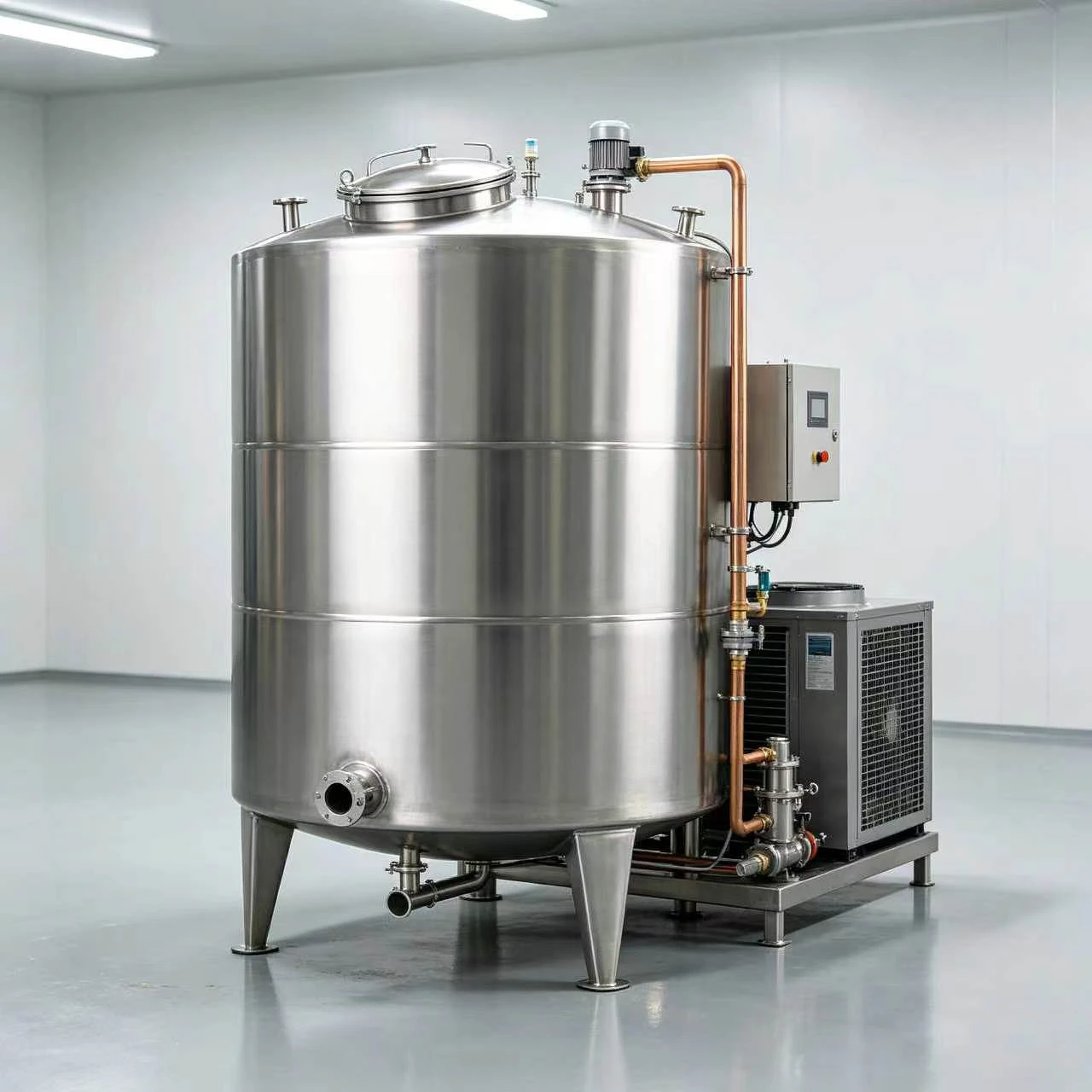
Based on control methods, they are classified as manual, semi-automatic, or fully automatic CIP systems. Fully automatic systems utilize controllers such as PLCs to execute preset programs, offering a high level of automation.
Based on heating methods, they can be categorized into electric-heating and steam-heating CIP systems.
Based on mobility, they are classified as stationary or mobile CIP systems. Stationary systems are typically used for large-scale continuous production lines, while mobile systems offer flexibility and convenience, making them suitable for small-scale production lines, the sequential cleaning of multiple pieces of equipment, or environments with limited space.